
Buying a Denver rental property? You may own it, but good luck getting your rental license.
As a Denver rental licensing inspector who has helped landlords with more than 1,000 rental license applications, I’ve encountered a frustrating problem that should have been solved long ago: Denver-area title companies frequently overlook the existing rental license when a rental property changes hands.
Here’s what happens.
A buyer purchases a rental property, closes through a title company, receives the deed, and reasonably assumes everything is in order. But when the new owner applies for a Denver residential rental license, the City rejects the application because the previous owner still has an active license attached to the property.
Denver’s “logic” is that a new owner cannot just simply cancel an existing license, even if it is clear, based on Denver’s own records, that the new owner is the one and only legitimate owner of the property and might otherwise in other versions of logic, be considered the only legally entitled party to qualify for a rental license.
The new owner is then left trying to track down a seller who may have moved out of state, has little incentive to help, or simply doesn’t understand why they need to log into Denver’s licensing system and surrender a license for a property they no longer own. In a number of cases, sellers have moved to locales like Florida and make it an active act of civil protest to not cooperate with the new owner in helping them obtain their rental license from the City and County of Denver.
The result? An entirely unnecessary bureaucratic nightmare.
Denver does offer a New Ownership Notification process, allowing the buyer to provide proof of ownership, which includes requiring the new owner to submit the deed of their property purchase to the rental licensing department (which is located in the same building as the Clerk and Recorder who is the registrar of those deeds) and request that the previous license be closed. But that adds another layer of paperwork, delays, correspondence, and follow-up to a transaction that should have been properly coordinated at closing.
I’ve seen new owners struggle for months with this issue, sometimes facing application deficiencies and deadlines despite having done everything they reasonably believed was required.
Title Companies Need to Do Better
To be clear, a rental license is not the same thing as legal title, and title insurance doesn’t necessarily cover licensing issues. But a title company coordinating the sale of an income-producing property should understand that Denver rental licenses do not automatically transfer to the new owner.
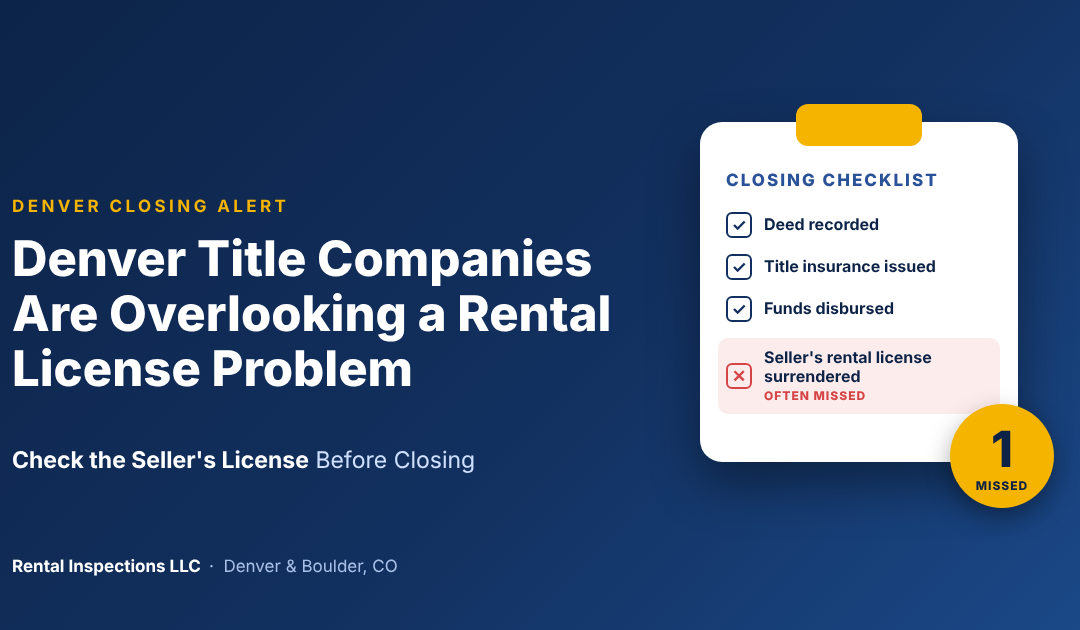
My recommendation is simple: Every Denver rental property closing should include a check for an existing rental license and a requirement that the seller surrender that license as part of the closing process.
A few minutes of attention before closing could save the new owner weeks or months of unnecessary frustration.
Denver’s rental licensing program has been mandatory for years. It’s time for the real estate closing industry to catch up.